Tuesday, November 6, 2018

The inside of the alt right viking groups

Throughout the turn of the century, alt right wing, and white supremacy groups has emerged, and is now predominate in media, and the American society of now. Additionally, these groups have taken a keen eye and interest in so called “Viking” culture, as their genetic roots, and have been a scapegoat to account for their violent acts. These groups turn to the raiding’s of Vikings, and their supposed culture, and lifestyle. More so, they contribute the fact that Vikings made their way to North America, with the example of 10thcentury Vikings, led by Leif Erikson, the most well-known Viking explorer, making his way, and proclaiming the north-eastern coast as Vinland. These alt right groups have been known for saying “Hail Vinland. Going along with culture, these groups have embraced Odinism, and aligning themselves with Nordic Gods, and even going as far as to dressing up as stereotypical Vikings, to protest their beliefs in anti-immigration, gun rights, and others. In this blog, it’ll be discussed more recent current events, and how Odinism stems from other hate groups, and why the hate groups got the Viking culture for the most part wrong.

 
            Even as of two weeks ago on October 27th, 2018, an extreme alt right member Robert Bowers, the Pittsburgh synagogue shooting. With the tragic shooting of elder Jewish people, in which one of them was a holocaust survivor comes with the question, in specific with the article, how are Vikings, and their culture involved with an anti-sematic act? Well it goes hand in hand with the group called Christian Identity, or CI. As radical Christian groups were the predominating main racial, anti-sematic terrorist group, Odinism evolved, and is on the rise to take the place of Christian Identity. As the people who practice Odinism mirrors Christian Identity with anti-sematic views, and other racial ideas, as an example of what Robert Bowers quoted the premise of John 8:44 “Jews are Satan’s children”. Additionally, Odinism brings the concept to follow the history and chivalry that Vikings practices. 


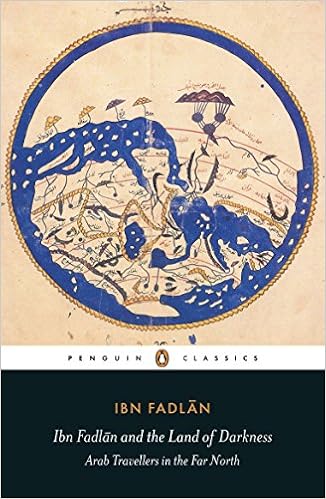
However, we all know that these groups like to stretch, and alter the truth, and history. As Vikings in reality did not only do raids, they were scholars, as Viking currency, and Muslim currency is found as a trade off in their respective cultures. It is evident that through the writings of Ibn Fadlan. He described Vikings as “The filthiest of God’s creatures”. Which in fact the Alt right have upholded truthfully. Other than that, Vikings did interact with other cultures, with or without raids. Additionally, Vikings almost consider women as equals. Although arranged marriages, and some misogyny was there in the culture, female warriors were founded alongside male warriors at grave sites, and ship wreckages. Showing that women can fight, alongside with men, and can be equals.

            In conclusion, racist hate groups, that follow the Viking culture, most notably Odinism, stems from Christian hate groups, as they both derive off of anti-semantic, and racist ideals. Why Odinism gives these racist people achance to dress up, and “explore” the culture, the truth is Vikings weren’t all that hateful. Sure, raiding’s were a thing, but at the end they were scholarly explorers as well.

Diffusionism and Viking Culture - A Look at Ibn Fadlan's Account


Hey, this is Nicole, and I’m sad to announce that this is our final blog post, everyone. It’s been a good run. To end the semester, I actually want to go back to the very beginning, to Ibn Fadlan’s piece, where we talked about Vikings as explorers and traders. There’s this really cool anthropological theory I want to introduce today to help us examine Viking culture and see how it was capable of changing so rapidly. Last time, we talked about syncretism regarding Iceland’s abrupt conversion to Christianity, and today’s topic kind of fits in with that. You’ll see how pretty soon.

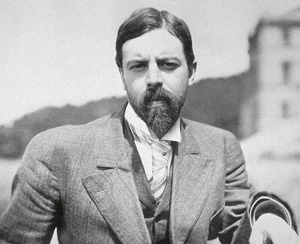
Image result for alfred kroeberSo, as I did in my first blog post, I’ll introduce our scholar first. Alfred Kroeber (1876 – 1960) was an American cultural anthropologist who studied under Franz Boas (also known as Papa Boas, as he’s widely considered to be the founder of American anthropology as we know it). He was involved in quite a few works, but the theory I’d like to look at today is called cultural diffusion. This is, essentially, the idea that cultures shape and bleed into each other. Kroeber studied this through archaeological means, looking largely at the items within cultural groups that were passed between, and influenced by, surrounding cultures.

Vikings, as we know, traveled and raided all over Europe. They weren’t even confined to one continent—they also reached North Africa, Russia, the Middle East, etc. Along their journeys, they traded and stole many cultural items from such places and brought them back home. This is the perfect example of cultural diffusion—the Vikings are undoubtedly affected by every culture they encountered in some way, shape, or form, and we can track this best with the material culture they introduced to their homes. But, also, Vikings shaped other cultures in their travels, too. We can see this clearly in Ibn Fadlan’s piece.

Image result for ibn fadlanIbn Fadlan was an Arab Muslim traveler who met and observed a group of Vikings on the Volga River. His written account of what he saw is famous as well as it is historic. Before Ibn Fadlan met this group, Vikings in general had established trade routes along this area and had been present for at least a century. This account was not written without bias. He clearly states that these Vikings are “the filthiest of God’s creatures” and “are like wandering asses.” This speaks to the differences in cultures—just as much as encounters such as these influenced both cultural groups, it also reified norms within each culture.

Through firsthand witness accounts like Ibn Fadlan’s, we can already see how Vikings are shaped by, and help shape, other cultures. Despite their filth, they brought their culture with them—Ibn Fadlan was even able to witness a ship burial—and intermingled with the people in these new lands. They brought things to trade with, and they took things back to their home countries.

As a last note, if we think about syncretism using this theory, it can be really useful here, too. Christianity didn’t spring up out of nowhere. It was adapted by Vikings and Icelanders from other cultures which were already practicing the religion. You could even say it diffused into Viking culture.

Anyway, it’s been fun. I hope to continue writing blog posts similar to this in the future—this was actually a great exercise for me. Learning and teaching about anthropology is one of my passions, after all!

Loss, and Incarceration in Neil Gaiman's American Gods

The life of Shadow Moon in Neil Gaiman's American Gods is one many people might consider tragic. The story begins with the end of his time in prison. In this time Shadow does little but mind his own business, read, think about how much he loves his wife, Laura, and practices coin tricks. Shadow's isolation from society and his loved ones were intended by the legal justice system to be his punishment, but the world that is waiting for Shadow when he finishes his sentence is not the world he was being separated from as penance anymore. The things that drove him to behave well, and willingly serve his time were not waiting for him when he returned. The loss of his wife through both death and betrayal made the years he spent apart from them feel pointless, and hollow. Upon reflection, he wasn't left with a regret for the crime he did, but instead a loathing for his punishment. No moral adjustment was made, no redemption for his repentance, and no place to go now. His three-year long isolation made him an outcast and stranger to his own community. It leads to a life with only more isolation insight. That drove Shadow to make decisions he wouldn't have if he had not been incarcerated. He would not have agreed to do morally ambiguous odd jobs for a suspicious old man, or wager his life on a checkers game, or actively avoid assisting in an investigation despite the threat of violence. Shadow is a fictional character in a modern fantasy novel, but his story carries truth.
More often then not those who return to society after serving a prison sentence are met with such social and situational adversity that they are driven back into crime. The reincarceration of repeat offenders is called recidivism, and according to the U.S. Department of Justice's 2014 statistical analysis of recidivism of Prisoners released in different 30 states in 2005: "About two-thirds (67.8%) of released prisoners were arrested for a new crime within 3 years, and three-quarters (76.6%) were arrested within 5 years." The Justice Department defines this as a mere 'relapse' of criminal activity but offers no statement on the cause of repeat offenders. The rate of recidivism was also higher for African Americans(74%) than Caucasians(68.8%) or Hispanics(70.7). The charges they were initially convicted for were also not as likely to be violent crimes, but instead drug charges with 31.4% of inmates released in 2005 for 12 states. Notably higher than the runner-up category, property(theft or damage), with 29.1%. It is also more likely for young people to be incarcerated with people between the ages of 18-29 making up 35.8% of all prisoners released.
What causes people who have just spent years of their life waiting to re-join society to act in reckless ways that land them back in jail? Each person has their own reasons for choosing a life of crime, but most relate to a lack of other options. People who turn to crime feel and act as if they have no one to help them, nothing to live for, and nowhere to go. Just like Shadow did. I would argue that separating people from society as a form of punishment only causes desperate people to lose the few connections and meaningful relationships that might serve as a safety net for them as they try to reacclimate to their society. It also takes away their chance for decent employment and the legal right to participate in government if they are convicted of a felony or higher charge. What choices do you have left when you have no one, no money, and no rights? People are driven to do dangerous things to survive, and then those decisions made in desperation land them back in custody the cycle of misery continues. They are further isolated from their loved ones, even less likely to find a decent job, and even more likely to make rash decisions.
Isolation from society as punishment had been used for centuries and is a prominent theme in both American Gods and the Viking Sagas. In the Saga of Grettir the Strong, the main character is forced to live outside of society for murder, and in his desperation, for the company, he willingly allows two men he knows plan to kill him to live with him. This ends with him killing them. His criminal banishment from society also causes Grettir to squat on land he doesn't own, murder many more times, and steal. All the while Grettir laments his situation much like Shadow regrets the time he spent in prison after the death of his wife. All these stories tell of the dangers of isolation, and in very few circumstances does something good come from it. Grettir died alone and miserable. Shadow was coerced into an dangerous and morally questionable employment. 76.6% of people released from prison were back in prison five years later. Rather than serving as a place of repentance and rehabilitation, our prisons are creating people that know no other way to survive but to commit more crimes. The way we handle criminal activity in this country is making serial criminals, and if there is to be any hope for them or the communities they were removed and returned to, something must change.

Sources:
https://www.bjs.gov/content/pub/pdf/rprts05p0510.pdf
https://www.nij.gov/topics/corrections/recidivism/Pages/welcome.aspx
https://www.viivhealthcare.com/media/125714/hiv-behind-bars-lead-image.png?width=700&upscale=false


How to Train Your Dragon: Is Toothless the Perfect Viking Pet?

Important pets mentioned in Viking materials…


1.       The Saga of Grettir the Strong—some innocent mutilated creatures illustrating Grettir's wayward behavior in his youth that turned out to foreshadow a future just as scary as it seemed it probably would be at the time (of particular note: a flayed mare named Kengala) [27]

2.       Njal’s Saga—Gunnar’s dog Sam [117]

3.       Egil’s Saga—not really any noteworthy pets

4.       American Gods—Hugin and Muninn, Mr. Wednesday’s sassy ravens, one of whom the main character Shadow gets directions from [141]

Traits of the two key pets mentioned in these books…


«  Sam: intrinsic supernatural predictive abilities benefitting his owner (biting those hostile to him/quick character discernment); loyal to the point of death/dies at the same time that Gunnar does (harbinger of his owner’s imminent downfall); defends his owner (this stated as his best quality when given as a gift from a friend); large and intimidating (Gunnar observes) [117, 125-126]
«  Hugin and Muninn (based mainly on Internet resources, e.g., https://mythology.net/norse/norse-creatures/huginn-and-muninn/): endowed by Odin with their supernatural abilities (not innate)—can fly around Earth/Midgard in a single day, speak human languages, and are wise informers and confidantes who are handy for scouting out battle terrain and enemy movements, and their names (“Thought” and “Desire/Mind”) suggest that they are projections of their owner’s consciousness; theorized by scholars to be connected to Odin’s fate; defend him from hostile attacks; look like common ravens

Shared traits…


Supernatural abilities that are advantageous for the owner, a lifespan linked to the owner’s, defend the owner

The traits that distinguish Toothless, as pulled from the official hidden world of dragons (the How to Train Your Dragon website, https://www.howtotrainyourdragon.com/explore/dragons/toothless)


“Playful, inquisitive, and intelligent, Toothless is more Hiccup’s best friend than his pet. He is extremely protective of his Viking soulmate, and will stop at nothing to guard him from all harm. As the last known specimen of the Night Fury species, Toothless is indisputably special. He commands respect from dragons and humans alike.”

And if you’ve watched the movie, you’re well aware that what makes Toothless different from every other dragon, as a member of the Night Fury group, is his insane speed-bolting thing. He can power up like he just ate a Mario Kart mushroom and zip across the sky so fast you can’t see him. Also, being a dragon, he breathes fire. The site lists an echolocation capacity for him as well, something to do with plasma. Weird and useful.

The only thing left for Toothless to be able to do is to prove that his destiny matches Hiccup’s. Real Viking dogs and ravens go down with their warriors and/or deities. So does Toothless make the cut there?

Watch the video below and make the call yourself. Most people would take a dragon any day because with him/her as your pet you can roast not only your competitors, but also whatever nearby looks tastiest to eat, vegetable or animal, and have excellent barbecue on the spot. But Toothless, in addition to having more skills than most dragons and listing chef at the bottom of his long list of assets, seems to have an opinion as to whether he and Hiccup will meet the same end. (Earlier in the film, for those who haven’t watched it, Hiccup accidentally tore half of the back of Toothless’s tail off, by the way. That detail might come in handy while you’re considering how similar their outcomes are in life.) 

Monday, November 5, 2018

"It is Wednesday, my Dudes."


            All memes aside, this blog is going to be focused on the way that Odin is portrayed in Gaiman’s American Gods as the enigmatic and unsettling Mr. Wednesday. I would like to talk about how he is similar to the Odin we have read about so far, and how he might differ from him in some ways. In addition to that, I think discussing American Gods—especially the gods within the universe—would be incomplete without thinking about how a deity such as Odin is being used in the social and political contexts of today.
Image result for mr. wednesday

            From the moment of his introduction in American Gods, Mr. Wednesday has been surrounded by an air of mystery, and our clueless protagonist’s attempts at trying to unearth the answers to his (and also our) questions only raise more question marks. Although it is likely that by this point Shadow knows (or at least suspects) that his employer to be related to Odin in some way, there is still some sense of uncertainty. We are told to believe everything. Consequently, the countless parallels between the Odin of Norse mythology and Mr. Wednesday—most glaringly his missing eye, silver tongue, and two raven confidants—all point us to this conclusion.

            Mr. Wednesday is to his own admission a grifter, a hustler, a con man. He delights in what he does for the sake of it: “’Why are you doing what you’re doing?’ ‘Because I want to,’ said Wednesday” (pg. 2017). However, it is ultimately also how he survives. This grifter lifestyle echoes what we’ve read of Odin and the many ways he tricks, deceives, and outsmarts people using his quick wit, silver tongue, and no small amount of magic. While American Gods has thus far not featured the full-on transformative powers of seid (at least not explicitly) for Mr. Wednesday, there are several moments where his ability to get into character are described in a way that blurs the line between “really good acting” and “straight-up magic.” Lastly, his use of runes and charms is also mentioned; like many of the references and hints in American Gods, it is passed-off as a side-note or a trivial detail. In this example, it is tied to Odin’s sexual exploitation of women: “He was doodling with his fingernail in the spilled salt, making squat, blocky rune-like shapes. The waitress stood passively beside him, reminding Shadow less of a fawn and more of a young rabbit caught in an eighteen-wheeler’s headlights, frozen in fear and indecision. Wednesday lowered his voice, so much so that Shadow, only across the table, could barely hear him. ‘What time do you get off work?’ ‘Nine,’ she said, and swallowed. ‘Nine thirty latest.’ ‘And what is the finest motel in this area?’ ‘There’s Motel 6,’ she said. ‘It’s not much.’ Wednesday touched the back of her hand, fleetingly, with the tips of his fingers, leaving crumbs of salt on her skin. She made no attempt to wipe them off. ‘To us,’ he said, his voice an almost inaudible mumble, ‘it shall be a pleasure-palace’” (pg. 214). Like his practice of seid, his use of runes and charms as well as his views of women echo what we know of Odin from the Poetic Edda.

Related image


            The last thing I’m going to talk about is Odin’s role to play. I’m not talking about his role as a leader for the “Old Gods” in American Gods, but rather what he means to us today. If we go by the rules which Gaiman has set for us in American Gods, gods are defined by who believes in them, and what people believe about them. In light of the rise of Odinism and the appropriation of Norse mythology by hate-groups, we would expect Odin to reflect this new interpretation of the Norse deity. Our dear Mr. Wednesday would relinquish his hustler lifestyle in favor of hate-speech and white nationalism. This begs the question: would he be more or less powerful in this new form? I honestly don’t know. The redefinition and appropriation of runes by white supremacists would certainly shake up Odin’s understanding of how to actually do magic; then again, if a god’s power is determined by our belief in them, does this really matter?
Related image

Women Bite Back


In Neil Gaiman’s American Gods Bilquis is a female character that is revealed after the first chapter. She works as a prostitute, selling her body to men for money. However, there’s a twist. She ends up vaginally eating her partner during intercourse, ultimately consuming him. This is commonly known as vagina dentata, where there is teeth and ability to consume a partner during intercourse with female genitals. The 2007 film, Teeth, is about a teenage girl who believes in abstinence but finds out that on top of dealing with high school, boys pressuring her into sex, and puberty, she also discovers she has vagina dentata.  Both Bilquis and Dawn (the protagonist of Teeth) exhibit a power only women can possess, and use that power to fight back against misogynistic behavior and sexual violence.
Vagina Dentata is literally the ‘pussy bites back.’ The myth can be found in almost every culture and originates from men’s fear of castration. Or does it? Castration takes away a man’s genital’s and because in society men’s sexual activity (how much, how often, and how many partners) determine their masculinity, it makes sense castration would be a primal fear. However, this fear of castration being caused from having sex with a woman can reveal another fear: the fear of women taking back power.  Essentially, this is women taking back their sexual power, something men have continuously tried to possess and control for centuries. 
In Teeth Dawn does not discover her hidden ability until she is raped. Of course, this leaves her rapist castrated, and he dies from blood loss. Dawn is left utterly traumatized from not only the rape, but also because she blames herself for the death of her rapist. She ends up attempting to see a gynecologist, because she does not know who else to turn to. The gynecologist proceeds to sexually assault her (using his un-gloved hands to finger her) and ends up losing two of his fingers. Dawn leaves crying and desperate. She is your stereotypical damsel in distress, that is, if all damsels in distress had toothed vaginas. 
Finally, after doing extensive research, she thinks she’s found an answer: a hero must come and tame her. So far, the film seems utterly sexist and bogus, so this is not at all surprising. She finds a guy, one who seems genuine and respectful of her, and thinks she has found the said ‘hero.’ But, yet again, she is disappointed. During intercourse, he reveals him and his friend made a bet to see who could sleep with her, and the audience hears the satisfying crunch of his genitals leaving his body. She leaves him, and realizes she must own her power and not ever be ashamed or fearful of it again. So far, it has only come to her in aid, and has saved her from multiple occasions of sexual violence. The film ends with Dawn choosing to own her power, as well as her sense of sexuality. Dawn essentially turns the tables on sexual predators; by them attempting to assault or rape her, they are becoming victims themselves, and ultimately losing their ability to ever rape a woman again. 

Bilquis does something similar. Instead of using her power in self-defence against predators, she uses her power to feed herself, both literally and figuratively. She eats her client for nutrition, but also, there is satisfaction in taking back power. In her situation of being a prostitute, the client has the power and usually objectifies her and treats less than human. Her client degrades her, and openly insults her several times: “‘I shoulda just got you to suck me off in the car … When I saw you first, on Sunset, I almost thought you were a man … Let me fuck you … I have to fuck you’” (Gaiman 25-26). ‘Fuck’ is a derogatory term for sex and is sexist. Why? People often use the term to describe something bad, like, “Fuck that,” or “fuck you.” This means it has a negative connotation. It is also simultaneously switched out with ‘screw’ as in “Screw you.” When a screw is drilled into wood, the screw is perfectly fine but the wood is permanently damaged. Using these terms like this suggest negative things for women and sex, and insinuates and inherent patriarchal view. Bilquis lets this slide, and ultimately shows that she is the one in power and with control, not him. In fact, some can say he was ‘screwed’ the moment he ever agreed to hire her.
            Vagina dentata is a myth created to suppress women’s sexualities, but in Gaiman’s use of the myth, it empowers women’s sexualities by refusing to be submissive, suppressed, and inferior.
           

References: 
https://www.vice.com/en_asia/article/new558/vagina-dentata-myths-from-around-the-world


Themes of Hinduism in American Gods

Hinduism is a broad term that encompasses the beliefs of many people. What exactly Hinduism means depends on the person you ask. In my studies of Hinduism, one memory sticks out, going to the Karya Siddhi Hanuman Temple in Frisco Texas. While I was there talking to the representative of the temple, we got on the topic of “how many gods are there in Hinduism.” He replied with something like “268543843 gods. But, the number isn’t important.” In his belief the gods are innumerable and if you could count them the amount would constantly changing. Another belief is that there is a single god who can take infinite forms. Gods fall in and out of popularity and sometimes into obscurity. Later, he talked about how it doesn’t matter who or what you worship just that you don’t hurt anyone in the process.

Image result for hindu temple frisco
Karya Siddhi Hanuman at Frisco, TX

Any god can be a Hindu god in the temple representative’s opinion. This belief touches on something similar to the metaphysics of “American Gods.” If you believe in something and worship it, purposefully or not, it is real. The new gods like Technology and Television come to mind. We worship them without realizing and we provide valuable sacrifices like money or time. In this light, you could argue that these are Hindu gods. We worship them with our attention and we mostly don’t hurt other while doing so.

Image result for worship the tv

            Many Hindu writings, like the Bhagavad-Gita for example, show that the gods can take many forms. In the Gita its Vishnu as Krishna but in “American gods” all of these gods have this ability. They use these forms to get close to humans and to impact their lives. Mr. Wednesday uses this to get close to shadow and to blend into the human world around him. Similar to how Krishna takes human form to influences and help those around him.
Image result for vishnu as krishna
Vishnu as Krishna reveals his true self to Arjuna
            Eventually Kali herself, a popular and still worshipped Hindu god, comes into the book. (124) The description of her is, “something huge, a naked woman with skin as black as a new leather jacket., and lips and tongue the bright red of arterial blood. Around her neck were skulls, and her many hands held knives, and swords, and severed heads.” This description is strikingly accurate to illustrations of Kari all around her places of worship. Her fierceness and wrath are also characteristically accurate. In response to a question asking her what she would do if she was attacked, she says, “if they try such a thing, they will find me hard to catch, and harder still to kill.”

Image result for kali
Modern popular Smashan Kali painting by Raja Ravi Varma


            The concept of Dharma is also at work here. This is also another concept whose definition is a little hard to nail down. The temple representative thought of dharma as the cosmic order but Sikhs and other Hindus may give you a different answer. The old gods are trying to maintain their rule against these newcomer gods. This could be thought of as them maintaining their cosmic order. The book keeps alluding to a coming storm. Storms being inherently chaotic makes the Dharma connection fitting.