Showing posts with label Roles. Show all posts

Monday, October 8, 2018

The Strength of Women Threatening the Strength of Men


     In speaking on the topic of strong female figures in society, I believe an interesting character to note would be the evil foster mother Gothel from Tangled. Through this strange connection Gothel who is an elderly woman looking for the secret to youth is as stubborn and harsh as both Bergthora and Hallgerd in Njal’s Saga. As the story goes, Gothel happens upon a magical flower that when you sing to it, the flower both heals and preserves your youth. Rapunzel’s mother was very sick around the time of child birth and guards found the flower and gave it to her in order to heal her. Because of this, Rapunzel was born with magical hair that assumed the same powers as the original flower. Gothel, seeing all of these events take place, had one goal in mind, to stay young and live forever.
     Gothel kidnapped Rapunzel from the king and queen and set off into the forest. As Rapunzel grew older she became more independent and curious about the world and set off to see it while Gothel was away. After Gothel returned and saw that Rapunzel had left she again feared for her youth and beauty and soon turned into a very spiteful and vengeful woman as she searched for Rapunzel. Along Gothel’s travels in a never-ending search for eternal life and beauty, she encounters two henchmen who are known thieves throughout the forest. In an attempt to convince them to help her, Gothel bribes them with riches beyond belief and revenge on a fellow thief who betrayed them. Throughout the story we see how Gothel easily gets her way as she is tunnel visioned towards retrieving this magical power. Gothel is easily one of the most manipulative and clever characters in the film and truly proves that she will, by whatever means necessary, have her way. Towards the end of the film we see that she ultimately kills the only person who Rapunzel finds true happiness with and again proves the extent of her evil character.
      In a direct comparison, Bergthora and Hallgerd’s feud between each other is also over something as shallow as beauty and they too become tunnel visioned in their plot for revenge and the spite they have for each other. Both of these women characters in Njal’s Saga are very prideful and entitled and will not take offense to their title lightly. When these two hard headed women collide, it is as if Gothel has met her ultimate stubborn and unyielding match. In either case both Gothel, Bergthora and Hallgerd are conniving, manipulative and relentless when it comes to achieving their goal. In one part of the text Bergthora is attempting to coax her husband and sons to seek revenge on Sigmond who has insulted their character. In the text Cook relates, “Gifts have been given to you all, father and sons, and you’re not real men unless you repay them.” (Cook 74) . Evidence of their true authority reveals itself in that the people these women manipulate are not only other women but men as well. Bergotha and Hallgerd both manipulate their husbands to act out against their normal docile character in an attempt to seek revenge on the other. They also use male slaves as a source to get back at the other for petty revenge. Gothel manipulates strong and ill minded henchmen to follow out her will. Gothel also convinces a drunken man outside of a forest pub using her youth and charm in an attempt to obtain more information about Rapunzel and her whereabouts. Again, in both cases Bergthora, Hallgerd and Gothel are all very strong female characters who can easily manipulate and persuade others to get what they want no matter how small or how big their need/want may be. Overall, the true strength of women is shown not through their sexualization but through their cunning minds and their drive to get what they want however they have to go about it.

Saturday, October 6, 2018

The Role of Female Characters and Female Bodies in Pop Culture “Viking” Media


After reading Njal’s Saga, we get a clearer, more diversified picture of what female characters can, should, and will do in their lives. Based on Ibn Fadlan’s account alone, we would get an extremely limited and unrepresentative portrait of women in Viking cultures. When characters like Hallgerd and Bergthora are added to this tableau, however, we begin to see that while their environments are distinctly male-dominated and patriarchal, women still have opportunities to exercise power and influence events in major ways. This does not seem to have translated into pop culture, and the entertainment industry takes advantage of female characters for the benefit of a primarily male audience.
            If you were to ask someone at random today what their most recent or memorable encounter with Viking culture in the media was, they would probably point towards TV shows such as Vikings or The Last Kingdom, or perhaps even video games like God of War, For Honor, or The Elder Scrolls V: Skyrim. I personally only have experience with the first and last of these examples, so this is where this blog will be focused.
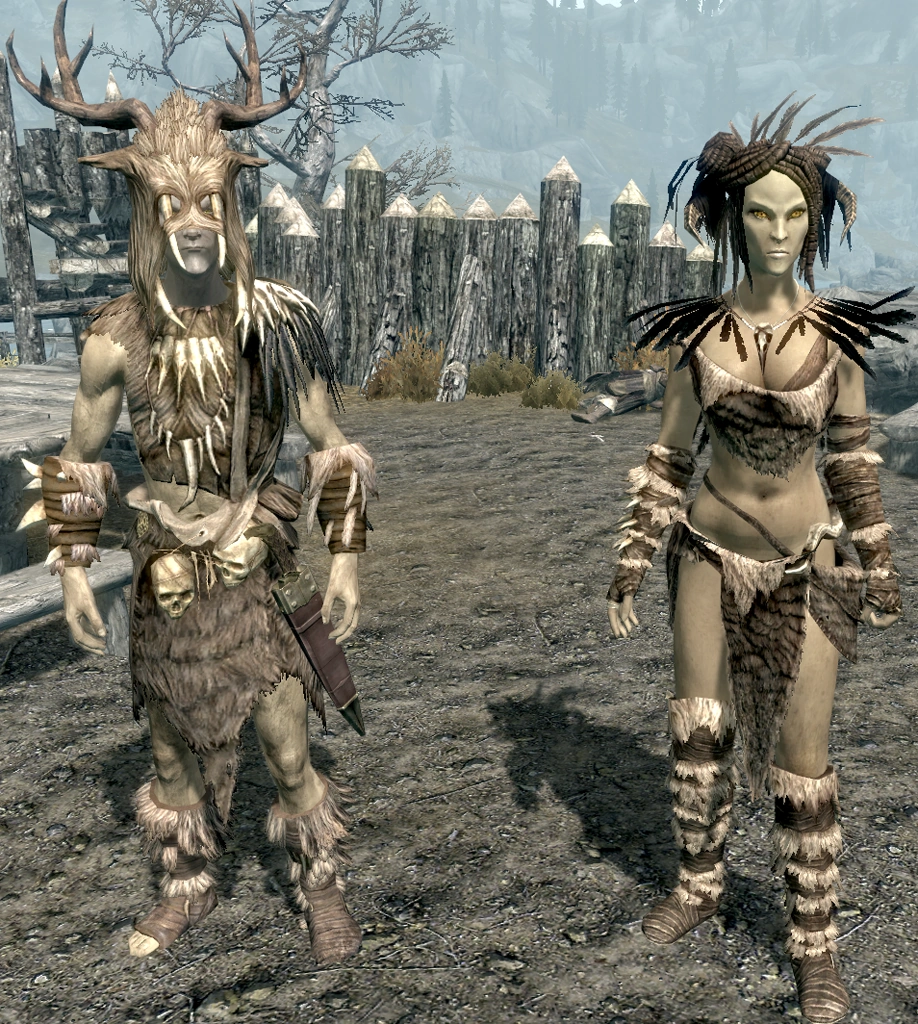
            First, let’s talk about armor. Specifically, let’s talk about the difference between “male armor” and “female armor” in media. Here, I’ll be using pictures from Skyrim to illustrate what it is I’m talking about, and I’m sure most if not all of you already know what I’m going to point out.

Related image

            The point of armor is to keep you protected from various forms of danger, like someone wanting to take care of your backache with an axe, or a formerly-blind man trying to chop your head off, just to name a few… This makes perfect sense, unless of course you’re designing armor for your video game or tv show characters. In these cases, it obviously (sarcasm) makes sense to make armor for female-bodied characters more… non-existent, because the most important thing about these characters is obviously the fact that they are female-bodied (sarcasm) and we need to remind consumers of this media of that fact by having them walk around in metal bikinis in frigid temperatures. This is totally what any sane person would do in a real situation (S A R C A S M). This approach goes in complete opposition to characters like the Valkyrie Brynhild/Sigrdrifa, who are portrayed as fully-armored, sword-in-hand, and ready to kick your butt straight to Valhalla.

Related image

Sure, this gendering of armor doesn’t always happen, but it happens often enough for us to notice a pattern and for things like “bikini armor” to become a defining aspect of the video game world. Additionally, you may want to point out that in a lot of pop culture material, Viking armor shows a lot of skin regardless of the sex of the person wearing it. Yes, it is true that shirtless berserkers and longaxe-wielding barbarians with exposed arms and legs. However, think about how this exposed skin is often used and sexualized. For males, the exposed skin accentuates their muscular bodies. For females, the exposure is done primarily to show off body parts that are often sexualized (cleavage, thighs, lower back, etc…). So it’s not just about the exposed skin and subsequent uselessness of their “armor,” but also about the purpose of exposing said skin.
Related image

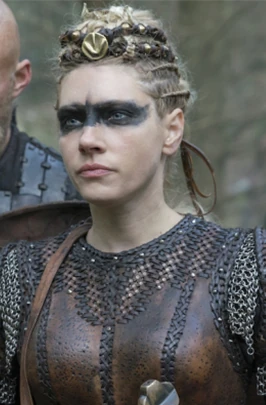
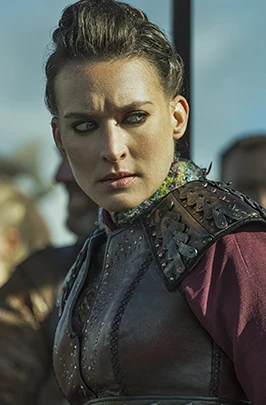
Let’s shift gears and talk about the roles and personalities of female characters in a TV show like Vikings, and compare them to some female characters from Njal’s Saga. Vikings is known for having some “strong female characters,” and characters like Lagertha or Astrid certainly challenge the housewife/damsel in distress archetype by participating in “masculine” activities such as warfare and leadership. However, this comes at a cost. First, it implies that women’s only avenue to power or respect (from other men) is by becoming more like men. Yes, it challenges gender role archetypes, but it doesn’t actually challenge gender norms. While we don’t see as many physically strong female characters in the saga, we do see women subvert the plans and expectations of the men around them. Hallgerd, for example, is not described to be physically dominant; however, she is responsible for the deaths of countless people, including several husbands and a foster-father. She is able to work within the patriarchal system to exert power over others, especially men. Characters like Hallgerd and Bergthora are able to challenge the notion that women should be subservient, meek, and deferent towards men, not by being men, but by using the system itself to their advantage.
Lastly, I want to talk about sexuality and female characters in media. Focusing on Vikings, I have noted that most if not all female characters in the show are sexualized for the benefit of a heterosexual male viewer. If the women are not having sex with a man in the show, they have some sort of lesbian relationship. While portraying LGBT characters is admirable, it should be noted that we rarely (never in Vikings) see anything other than heterosexual or lesbian relationships, and the lesbian relationships we do see are fetishized or sexualized to please heterosexual men.